Breaking News
Main Menu
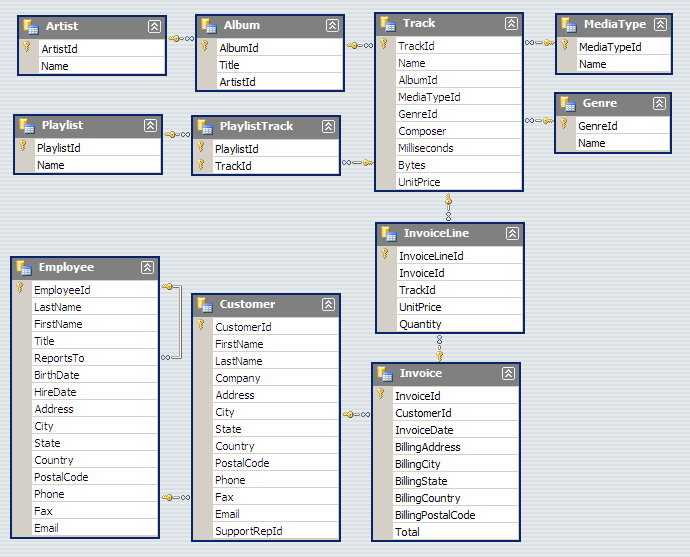
Microsoft Dynamic Crm Database Schema Example
четверг 11 октября admin 63
When you created your entity there were a section about where this entity should be displayed (Sales, Service, Marketing, Settings etc.). You should have checked one of this checkboxes. After creating entity you should click Publish all Customizations button (which is displayed on the upper menu of the solution where you've added your entity). Now your entity will be available through the upper menu in whichever section you've chosen (for example in Sales section). You create a record of your custom entity exactly like the other entities (Accounts, Contacts, whatever), there is no difference.
Microsoft Dynamics CRM 4.0 Sample Database Readme (On-Premise Edition) Important! Selecting a language below will dynamically change the complete page content to that language.
Clients often wait for direction on what needs to be done at the start of a project, particularly when a vendor has been hired to do the bulk of the work. I often tell our clients that the best thing you can do is start an inventory of the data that needs to go into the new system.
This should start with your current system, whether that be on paper or in another database. The inventory is often referred to as “The Data Dictionary” and is the most often referred to document in any project. It helps determine where you are and where you are going. It aids in the creation of the fields in the new system, the data migration efforts, integration, and finally testing efforts. Creating a data dictionary is something you can do even before you hire a solution provider.
This helps you organize and discover what it is you want in your new system. I use an Excel spreadsheet for data dictionaries and have a tab for each table or group of data (otherwise known as entities in Microsoft Dynamics CRM) to keep me organized. Yahoo full version. Along the top of a worksheet, I will list the type of information I need to capture, namely: • Field Name • Table • Database Field Name • Data Type • Length • Description (what it is used for) Figure 1: Contacts tab in the Data Dictionary I also like to specify some properties for each field, such as: • Read Only (Yes or No) • Audit (Yes or No)* • Required (Yes or No) • Sample List of data • Notes** *Auditing allows you to track when a field is modified and who modified a specific field. **List any requirements or business rules such as “if X = yes, then field Y = Z” Once this is done, the dictionary can be shared and used in the creation of the new system. Fields I add specifically for Microsoft Dynamics CRM are: • CRM Destination Field Name • CRM Destination Field Label • Data Type • Notes • Is it integrated with System X? (Yes/No) Examples of these are in the template. Figure 2: Contacts tab – CRM information As fields are created in Microsoft Dynamics CRM, the data dictionary gets updated so that it reflects what is happening in the system.
Once completed, this document can be given to the person on the project who will do the data migration. You are now aware where you are getting the data and where it is going. The whole process is mapped out and reduces churn during the migration phase. If I’m integrating Dynamics CRM with an ERP system, I will also indicate which field needs to be in sync with that system. This document then becomes an input to the integration process and can be expanded or used to reference other integration documents. Finally, this document is referred to in the testing process. A proper testing effort will test every field in the new system for function as well as test the data in the new system vs the old for accuracy.
If you would like to download a starter data dictionary template, it can be found here. Ingrid Kreitz Ingrid Kreitz is a certified Information Infrastructure Library (ITIL) and Microsoft Certified Professional (MCP) with more than 20 years of analyst and programming experience specializing in the design and development of highly customized ERP and CRM systems. As a Business Solutions Specialist for Encore, Ingrid brings an advanced level of technical expertise and business aptitude and her commitment and contributions have resulted in success across numerous projects and corporate initiatives. Beyond Ingrid’s technical proficiency, clients appreciate her comprehensive understanding of the unique processes and requirements of each individual user. Download yugioh duel monster sub indonesia.
Related Articles.